
吸收式抗蓝光材料的护眼效果是非常卓越的,GB/T 20145国家标准清楚的定义了蓝光伤眼能量,购买时要确认在410nm~460nm区间的吸收率;规格最重要,规格对了方可有效的护眼效果。
在白天环境光2000流明(相当于上午十点,晴朗天气在靠窗的室内)情境下,采用反射式抗蓝光材料和吸收式抗蓝光材料,人眼接受到的蓝光强度差值,反射式竟比吸收式多出近600流明,说明这种让眼睛看到更多蓝光的反射式材料不仅无效反而更伤眼,也说明了吸收式抗蓝光材料的护眼效果确实非常卓越。
那蓝光伤眼的国家标准是什么呢?其实光对人眼的伤害程度,国家标准在2006年就制定了标准GB/T 20145,这标准在定义光对生物的安全性问题,包括紫外线,红外线和蓝光对人体皮肤和眼睛的伤害量化数据;在这份标准里面,它有提到了如何去评价一个宽波段的光源对视网膜危害的光谱加权函数,从这个加权函数里面我们可以看到小于380nm以下的光对眼睛的伤害是小于0.01; 而大于500nm的光对眼睛的伤害也是小于0.1。说明所有光谱里面会对眼睛造成伤害的其实就是在380nm~500nm之间,其中区域最明显的就是从420nm以上,420、430、440、450、460、470,峰值在440nm,我们把这个加权函数称为“蓝光危害加权函数B(入)”。把蓝光危害加权函数和显示屏的光谱强度叠加在一起,乘积就是视网膜蓝光危害曝幅限值曲线或称蓝光伤眼能量曲线,得到440nm~460nm对人眼的伤害较大,因此业界标准就是(入max)在440nm~460nm的蓝光吸收率。
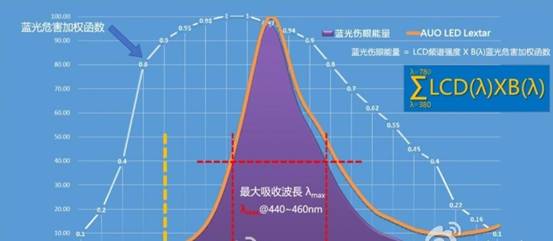
上图中白色的曲线就是蓝光危害加权函数,橘色的线是AUO量测出来的5.5寸1920×1080 FHD显示屏发出的光谱强度曲线,根据GB/T 20145的国家标准定义,我们把显示屏的光谱强度和蓝光危害加权函数相乘就可得到视网膜蓝光危害曝幅限值曲线或称蓝光伤眼能量曲线(紫色实心区域);观察蓝光伤眼能量曲线,具有以下特征,其一,显示屏不发出420nm以下的光线,因此420nm以下的伤眼能量可忽略不计;其二,虽然蓝光危害加权函数在420nm~440nm的比重很大,但是显示屏的光谱强度在这区间已经大幅减弱,因此计算出的蓝光伤眼能量不高,佔比只有15%,且和右侧460nm以上对称;其三,440nm~460nm区间占整体伤眼能量的70%,是比重最重区域,防制蓝光的标准定义于此。
坊间有人以自由基的概念讨论蓝光伤眼问题,認為430nm~440nm的光对眼睛的伤害,会造成最多的自由基,所以防蓝光的重点就是430nm~440nm;其实这就是蓝光危害加权函数概念,在430nm~440nm间的涵数值最高,但狭隘而不周全,没把显示屏的光谱强度考虑进去。
GB/T 20145的国家标准已经定义的非常清楚,视网膜蓝光伤眼能量曲线就是由显示屏的光谱强度和蓝光危害加权函数相乘积;选购抗蓝光的产品时,除了购买吸收式抗蓝光材料外,也要确认在440nm~460nm区间的吸收率;规格最重要,规格对了方可达到的护眼效果。如果你每天有4个小时或5个小时的时间在观看手机、平板或电脑,蓝光就会造成能量的累积,能量累积久了就会对眼睛造成一定的伤害。
目前,我公司有蓝光吸收剂LESORB 6832 ,LESORB B19用于太阳眼镜、液体树脂固化产品,薄膜,PC,PMMA片材等透明材料,能有效吸收蓝光,保护眼睛不受伤害。
The eye protection effect of absorptive anti-blue light materials is truly excellent. The GB/T 20145 national standard clearly defines the energy of blue light that harms the eyes, so when buying, make sure to check the absorption rate in the 410nm~460nm range. Specifications are the most important—only if the specifications are right will the eye protection be effective. In a daytime ambient light setting of 2000 lumens (equivalent to 10 a.m. on a sunny day indoors by a window), when using reflective anti-blue light materials and absorptive anti-blue light materials, the difference in the blue light intensity received by the eyes showed that the reflective type actually delivers nearly 600 lumens more than the absorptive type. This indicates that reflective materials, which let the eyes see more blue light, are not only ineffective but actually more harmful to the eyes, further proving that absorptive anti-blue light materials are indeed very effective. So what is the national standard for blue light eye damage? The truth is, the national standard for assessing the harmfulness of light to the human eye was established in 2006 as GB/T 20145. This standard defines the safety of light to living organisms, including quantitative data on UV, IR, and blue light damage to human skin and eyes. The standard also explains how to evaluate the spectrum-weighted function of a wide-band light source's risk to the retina. From this weighting function, we can see that light below 380nm has less than 0.01 harm to the eyes, and light above 500nm has less than 0.1 harm. This shows that the only part of the spectrum that really damages the eyes is between 380nm and 500nm, with the most significant region being over 420nm—420, 430, 440, 450, 460, 470nm, peaking at 440nm. We call this weighting function the 'blue light hazard weighting function B (λ)'. When we overlay this blue light hazard weighting function with the spectral intensity of a display and multiply them, we get the retinal blue light hazard exposure limit curve, also known as the blue light eye damage energy curve, showing that the 440nm~460nm range poses the greatest risk to human eyes. Therefore, the industry standard is that the absorption rate of blue light between 440nm~460nm should be (λ max). In the image above, the white curve is the blue light hazard weighting function, and the orange line is the measured spectral intensity curve of a 5.5-inch 1920×1080 FHD display measured by AUO. According to the GB/T 20145 national standard, multiplying the display's spectral intensity by the blue light hazard weighting function gives the retinal blue light hazard exposure limit curve—or the blue light eye damage energy curve (purple solid region). Observing the blue light eye damage energy curve, we notice several features: First, the display emits no light below 420nm, so the harm from below 420nm can be ignored; second, although the weighting function is significant between 420nm~440nm, the display’s spectral intensity in this range is much reduced, so the calculated damage energy is low, accounting for only 15% and symmetrically matching the area above 460nm; third, the 440nm~460nm range makes up 70% of the total eye damage energy, making it the heaviest area.
The standard for blue light prevention is defined here. Some people talk about blue light eye damage in terms of free radicals, believing that light around 430nm–440nm causes the most free radicals and therefore is the main focus for blue light protection. Actually, this is the concept of the blue light hazard weighting function, where the function value is highest between 430nm–440nm. But it's narrow and incomplete because it doesn't take the display's spectral intensity into account. The national standard GB/T 20145 has made it very clear: the retinal blue light hazard energy curve is the product of the display's spectral intensity and the blue light hazard weighting function. When buying anti-blue light products, besides getting materials that absorb blue light, you should also check the absorption rate in the 440nm–460nm range. Specs are the most important—only if the specs are right can you get actual eye protection. If you spend four or five hours a day on your phone, tablet, or computer, blue light energy can accumulate, and over time, that energy accumulation can damage your eyes. Currently, our company offers blue light absorbers LESORB 6832 and LESORB B19 for sunglasses, liquid resin curing products, films, PC, PMMA sheets, and other transparent materials, which can effectively absorb blue light and protect your eyes from harm.